


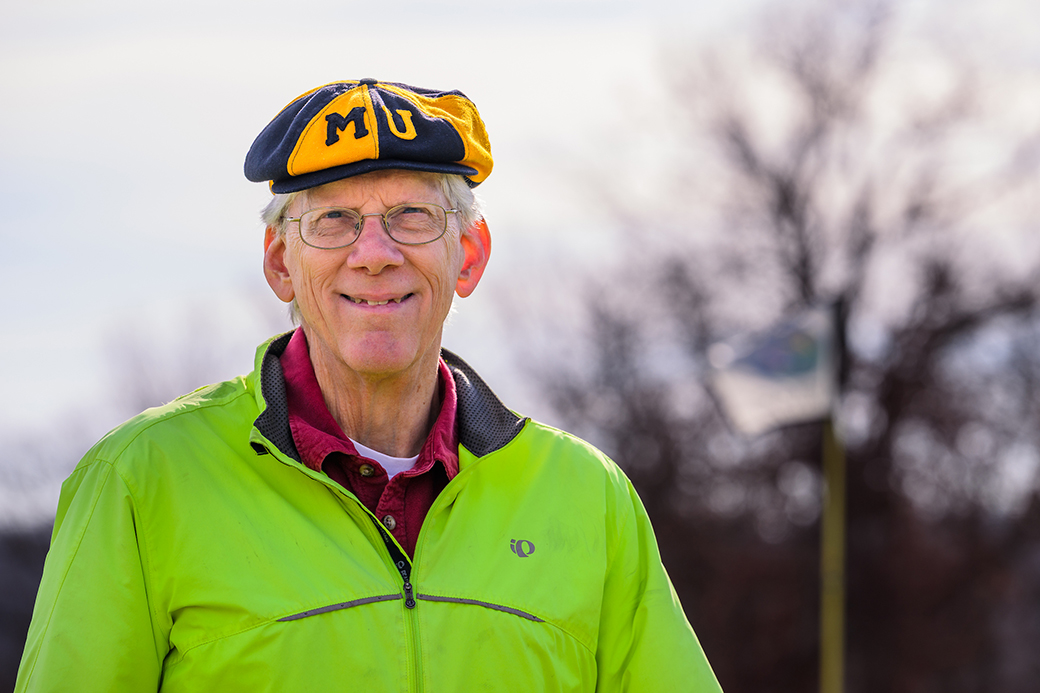
If you’re going by trips around the sun, Bill Kennedy knows he doesn’t have a young heart.
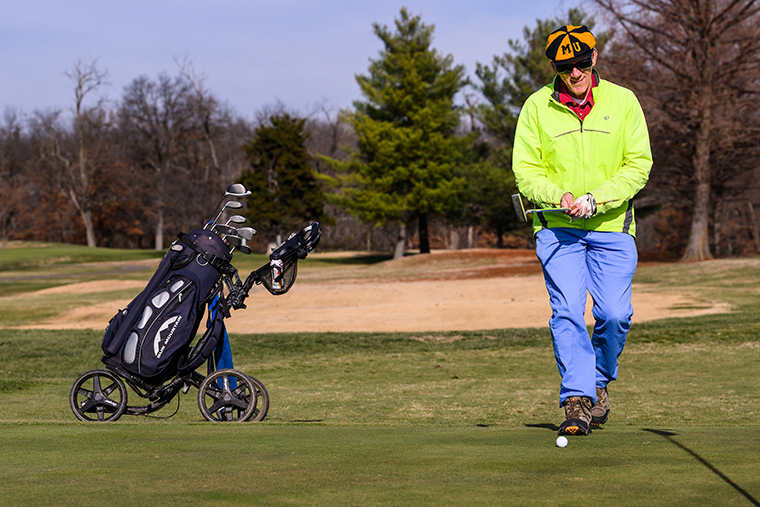
But after living in Columbia for nearly 50 years, Bill has found lots of ways to keep that youthful feeling. He cycles and walks on the MKT trail often, is a front-row clarinet player in the Columbia Community Band and tries to keep a weekly tee time at A. L. Gustin Golf Course.
“I started playing clarinet when I was 10 and was asked to play golf with a friend in seventh grade, and just kept up with both,” said Bill, who is now in his early 70s. “The funny thing about golf is you can play all day, and if you hit one good shot, you'll be back. For me, it was a fairway shot.”
After retiring from his job as a medical physicist at Ellis Fischel Cancer Center, Bill rededicated himself to his hobbies. He was so active that heart issues were not on his mind.
But when Bill started seeing Kevin Lease, MD, former internal medicine specialist as his primary care doctor, one of the first things Dr. Lease suggested was a Love Your Heart cardiac screening.
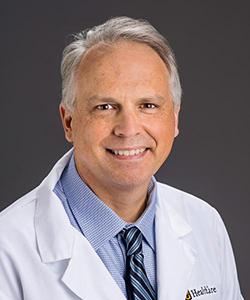
“I actually recognized Bill when he came to see me for the first time because I enjoy the Columbia Community Band, and he sits in the front row,” Dr. Lease said. “He was doing a great job taking care of himself.
Still, Dr. Lease wanted to make sure Bill’s aging heart was doing well.
“Sometimes, heart issues start without symptoms,” Dr. Lease said. “A Love Your Heart screening helps us better understand someone’s risk for heart issues even when they don’t have symptoms.”
Primary care providers like Dr. Lease use the results to refine risk categories and more confidently know when to recommend starting treatment.
“The cardiac calcium test gives you a complete picture, and I was glad to have a picture of a heart that was not doing well, actually,” Bill said.
When Bill’s results came back, his calcium CT score, which measures buildup of calcified plaque inside arteries, was a big concern. The images showed calcium levels that made part of Bill’s arteries look like they were made of bone.
“Cholesterol made in the liver gets deposited in the walls of the arteries over time and becomes calcified,” Dr. Lease said. “Most heart attacks happen not because the artery gets blocked but because that calcium deposit breaks a hole in the artery, and the body’s natural defense is to create a clot, which then stops blood flow to the heart.”
Dr. Lease started Bill on medication to reduce that buildup of calcium. He also prepared Bill to act if he noticed symptoms that meant his condition was getting worse, like chest pain or dizziness.
“The result was a big surprise to me,” Bill said. “I was in shock, but I was glad Dr. Lease was handling things. He’s a good technician to have with you.”
They started on a treatment plan, and Bill kept an eye out for signs of heart problems. One morning, it was obvious: He woke up with chest pressure.
Bill went to the University Hospital emergency department, where doctors found that he was not having a heart attack, but that things had gotten worse.
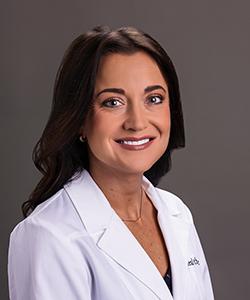
“Bill’s arterial buildup was at a point that it was actively dangerous to him,” said Lindsey Saint, MD, a heart surgeon and heart valve expert. “And he is a perfect example of how well a Love Your Heart cardiac screening can identify someone at risk of a heart issue before it happens. The signs of heart issues can often be written off as part of aging, and we want people to know that getting older isn’t a reason to accept feeling worse.”
Bill was taken for a cardiac catheterization procedure, also called a coronary angiogram, to remove his blockage. But during the procedure, Bill’s interventional cardiology team discovered that the amount of buildup, and its location, meant a stent was not the right option for him.
“We have a lot of research that shows that stenting a complex blockage like Bill’s does not reliably offer long-term success for the patient,” Dr. Saint said. “Because we had his Love Your Heart results on file, and because he was not having an active heart attack, that allowed his ER and interventional cardiology teams to stabilize Bill and refer him for surgery.”
A few days later, Dr. Saint and her team performed a successful coronary bypass graft. The procedure — Dr. Saint compares it to getting off the interstate to avoid a major crash — diverted blood supply through healthy arteries into Bill’s heart and avoided the blocked arteries.
“I have been around medicine long enough that I was glad there was a next step,” Bill said. “All of my care up to that point gave me a lot of confidence in my surgeons, and that whole team was amazing.”
Thanks to his active lifestyle, Bill’s recovery was rapid. He had surgery in April of 2025, and after two weeks of recovery in the hospital, completed three months of cardiac rehabilitation.
Clarinet was the first activity he returned to during recovery. Bill brought the instrument to one of his sessions and performed with another patient, a singer, for the other patients and staff in the room.
“Bill is a treasure. He’s very humble, and hearing him play, he’s just so talented,” Dr. Lease said. “I’m glad he’ll be able to keep playing in the Columbia Community Band for a long time to come.”
During rehab, Bill gave his rehab team clear goals: He needed to bike and play golf again. He got back out on the trail and the links in late summer of 2025 — and even completed a golf trip in Hawaii.
“I actually feel better than I did, and I think my heart is doing much better,” Bill said. “It’s stronger, and my heart rate doesn’t get as high when I exercise, so it must be more efficient. The Love Your Heart screening helped me get started on the right road to know what was going on with my heart, and I knew I was in good hands.”