At MU Health Care, we treat all types of skin cancer, including melanoma. Our experts are here to guide and support you through every step of your care.
Skin cancer is the most common type of cancer. It starts when skin cells grow abnormally and form tumors.
Cancer can show up anywhere on the skin — not just in places with excessive sun exposure. But it’s often found on the face, neck, arms, hands, ears or legs. Melanoma is the most serious kind.
At MU Health Care, our fellowship-trained specialists treat everything from small basal cell cancers to rare and aggressive melanoma, including those in delicate areas like the eyelids, ears and nose.
Whether you’re newly diagnosed or exploring your next steps, we’ll help you understand your options and build a care plan that best fits your needs.
Signs and Symptoms of Skin Cancer
Skin cancer can look different from person to person. Some signs can be easily missed or mistaken for something harmless.
Watch for:
- A flat, crusty or scaly patch of skin
- A firm or red bump that doesn’t go away
- A mole with uneven edges, mixed colors or an unusual shape
- A new or changing mole, especially one that grows, bleeds or itches
- A sore that bleeds or scabs and doesn’t heal
Melanoma is a skin cancer that can spread to other areas. Signs its spread may include:
- Enlarged lymph nodes, especially under the arm or in the groin
- Pain in the bones or abdomen
- Recurring headaches or seizures
When to Seek Care
If you notice any changes to your skin — especially a mole that changes color, size or shape — talk to your primary care doctor or dermatologist.
What Causes Skin Cancer?
Most skin cancers are caused by ultraviolet (UV) radiation from sunlight or tanning beds. Anyone can get skin cancer, but some people are at higher risk. Risk factors include:
- A family history of skin cancer
- A high number of moles or atypical moles
- A weakened immune system
- Fair skin that burns easily or freckles
- History of blistering sunburns, especially in childhood
- Precancerous lesions from sun damage
- Regular use of indoor tanning beds
- Spending long hours in the sun without protection
Types of Skin Cancer We Treat
We treat all types of skin cancer at MU Health Care, including:
- Basal cell carcinoma
- Melanoma
- Squamous cell carcinoma
We also care for rare or complex skin cancers, including:
- Dermatofibrosarcoma protuberans
- Merkel cell carcinoma
- Other rare sarcomas
Basal and squamous cell cancers are the most common and usually linked to sun exposure. Melanoma is less common but more likely to spread. Rare types may develop in sun-exposed areas or deeper layers of the skin.
How We Diagnose Skin Cancer
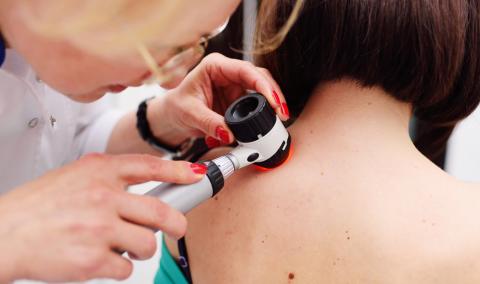
Diagnosis starts with a physical exam and a close look at your skin. If needed, we’ll take a biopsy — a small skin sample — to check under a microscope.
We may also use:
- Genetic or molecular testing to guide treatment
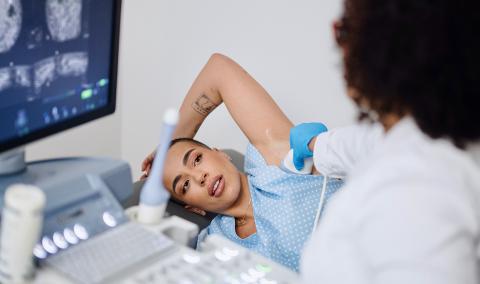
- Imaging tests like CT, PET or MRI to check for spread
- Lymph node evaluation if melanoma is suspected
We work quickly to confirm your diagnosis so you can begin treatment without delay.