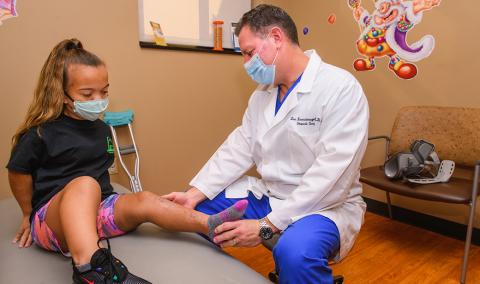
When your child has skeletal dysplasia, we offer a team of support to ensure their long-term health and quality of life.
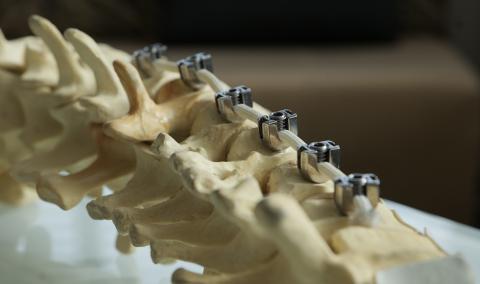
Skeletal dysplasia, or dwarfism, is a group of rare genetic bone conditions that affect your child’s growth, height and development. In many cases, our pediatric specialists can help your child grow stronger and live a fulfilling life with skeletal dysplasia.
Signs of Skeletal Dysplasia
Skeletal dysplasia affects how your baby’s bones and cartilage grow. Signs of skeletal dysplasia often show up in prenatal tests before your baby is born, or shortly after birth.
During a routine prenatal ultrasound, your care team may notice certain signs of dwarfism, such as:
- A curved spine
- A large head
- A small chest
- Short arms or legs
- Short fingers or toes
After your baby is born, signs of skeletal dysplasia include:
- A soft spot on their head that’s larger than usual
- Breathing problems
- Limited movement in arms or legs
If your care team suspects skeletal dysplasia, they may recommend more testing, such as:
A Care Team by Your Side
Receiving a diagnosis early can help you plan for your baby’s future.
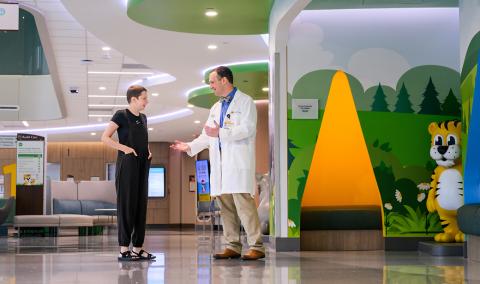
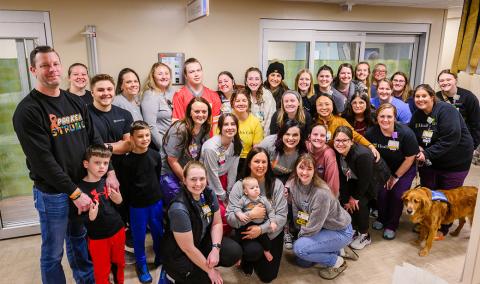
When you learn that your baby may have dwarfism, you’ll have an expert team of providers at MU Health Care who will support you and help create a plan that works for your family’s specific needs.
Your care team may include:
Our team will help you understand your child’s diagnosis and recommend next steps.
Types of Skeletal Dysplasia
Skeletal dysplasia refers to more than 400 genetic conditions that affect your baby’s bones, joints and cartilage. Types of skeletal dysplasia that our team treats include, but are not limited to:
- Achondroplasia: Children with achondroplasia often have shortened limbs, an enlarged head, bowed legs, unstable joints and trouble straightening their elbows.
- Campomelic Dysplasia: Campomelic dysplasia is a rare, severe form of dwarfism that affects breathing, though treatments today have improved survival and care.
- Cartilage-Hair Hypoplasia: Cartilage-hair hypoplasia, also known as metaphyseal chondrodysplasia, McKusick type, is a rare bone disorder that also weakens the immune system and affects many parts of the body.
- Diastrophic Dysplasia: Diastrophic dysplasia affects bone and cartilage, often causing early joint pain (osteoarthritis) and difficulty with movement due to abnormal joint development.
- Ellis van Creveld Syndrome: Ellis van Creveld syndrome is a rare form of skeletal dysplasia that can cause a child to be born with extra fingers and toes, knock knee, dental issues and heart problems.
- Hypochondroplasia: Hypochondroplasia is a form of dwarfism that slows a child’s growth after age 3 and increases their risk of developing learning disabilities and seizures.
- Multiple Epiphyseal Dysplasia: Multiple epiphyseal dysplasia refers to a group of conditions with few signs and symptoms that cause issues with bone and cartilage development.
- Pseudoachondroplasia: Pseudoachondroplasia is a form of skeletal dysplasia that is not usually apparent at birth and can cause slowed growth and difficulty walking, starting between the ages of 2 and 4.
- Spondyloepiphyseal Dysplasia: Spondyloepiphyseal dysplasia has two types. Spondyloepiphyseal dysplasia congenita is a rare genetic condition that is present when a child is first born and affects their spine, hips, knees and eyes. Spondyloepiphyseal dysplasia tarda is a rare genetic condition that affects only boys, and symptoms do not become apparent until a child is 6 to 8 years old.
Skeletal Dysplasia Diagnosis at MU Health Care
Our pregnancy care team typically diagnoses skeletal dysplasia during pregnancy.
Diagnostic tests that we use to identify dwarfism include:
- Amniocentesis, which tests fluid from your uterus to identify whether your baby has a genetic condition
- Chorionic villus sampling (CVS), which tests tissue from your placenta to identify if your baby has a genetic condition
- Fetal MRI
- Genetic testing and counseling
- Ultrasound, which can detect signs of skeletal dysplasia after 22 weeks of pregnancy
If your care team suspects that your baby may have dwarfism, they may refer you to our Fetal Intervention Center. Our fetal care specialists are experts in diagnosing and treating unborn babies who have genetic skeletal conditions.